


Traditional Render
Reliable
Friendly
Punctual
Approved installers
We offer a rendering service that involves the use of traditional rendering materials. Nowadays, sand and cement is a less common choice for rendering a property.
Below we have listed some advantages and disadvantages for this render system.
PROS:
- It is cost effective
- It is a durable render system
- The manufacturing process is environmentally friendly
CONS:
- Structurally, sand and cement is inflexible so it is prone to cracking
- It reduces the ability of a building to evaporate and circulate the moisture that’s produced inside the house itself
- It requires it to be repainted as a result of cracking occurring so this type of render has a fairly high upkeep


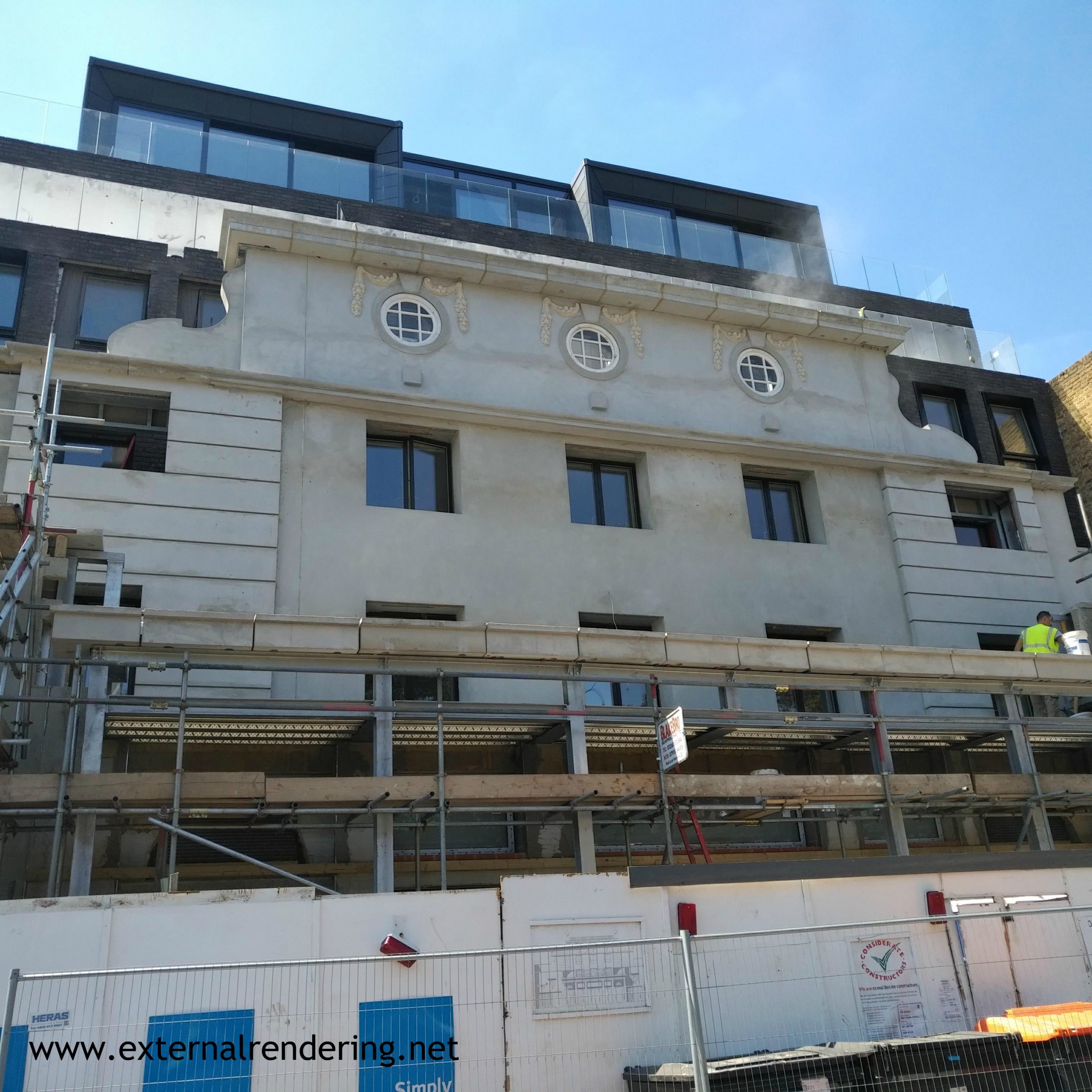
Practical aspects of traditional rendering
Traditional renders consist of a number of layers:
- The first coat or the “laying-on coat” is applied two or more times, consisting of a mixture of 2 parts lime to 5 parts sand. It is applied to the substrate until a depth of about 9-16mm is achieved.
- The first coat is allowed to set between 2 to 7 days before the next step can proceed ( the duration of 2 days applies to weather in the Summer and the 7 days duration applies to weather in the Winter).
- The middle layer or the “butter coat” is applied once. Note that butter coat is not common in practice.
- The last or finishing coat is applied once and consists of a mixture of 1 part lime to 3 parts sand. This coat is normally only be a few millimetres thick (3-9mm).
Why is traditional render a less common choice?
Modern render systems (such as silicone render) allow structures to breath, are easy to maintain and are less likely to crack.
Do you need to paint traditional render?
Yes, traditional render requires painting. Unlike the more modern render systems that are self-coloured.
Why is traditional render more cost effective?
The materials are cheaper and the process of application takes less time.
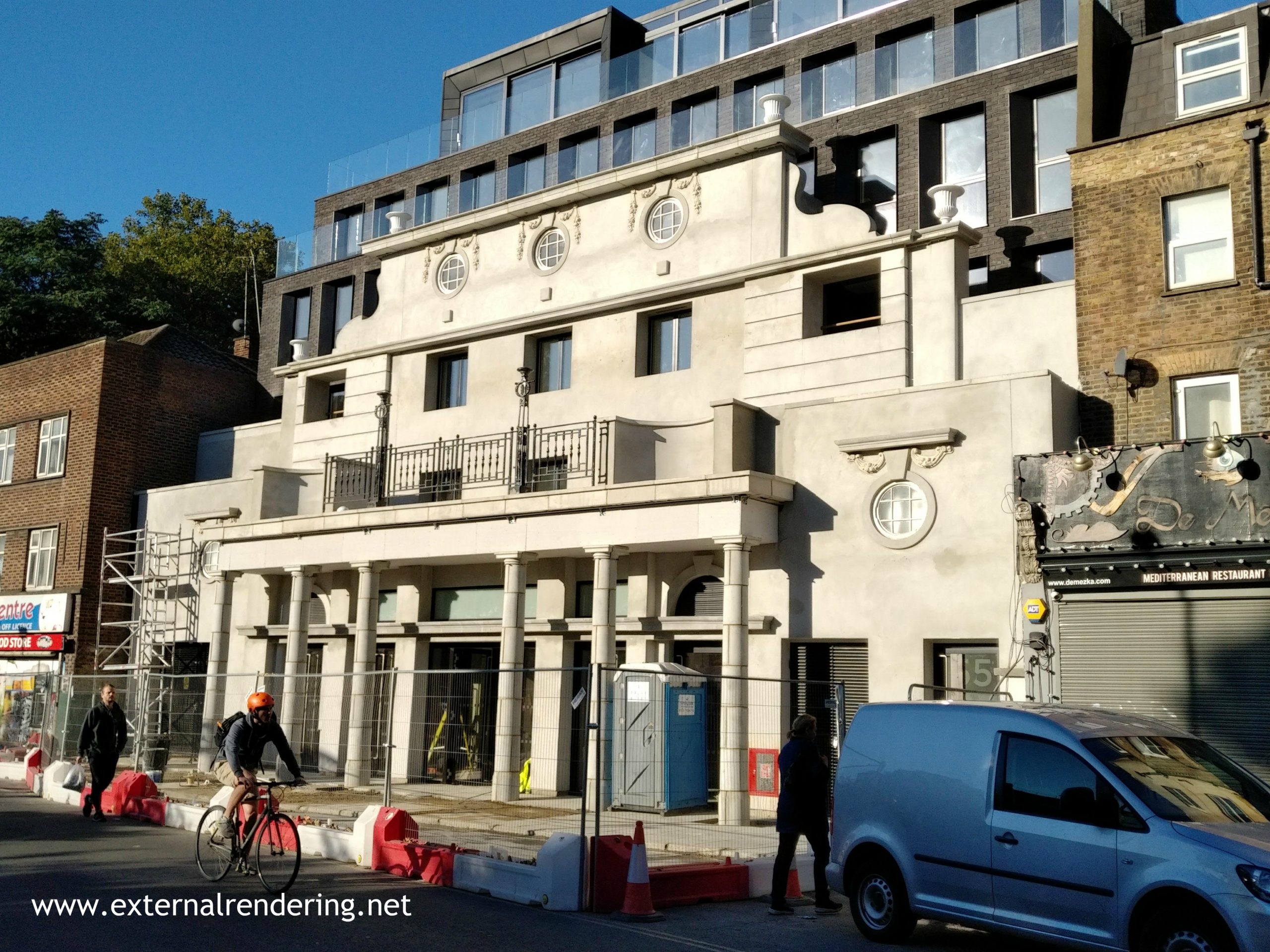
We can provide a one stop service for our customers which includes:
The Process
Once you contact us, we will provide you with a budget estimate. If the estimate is within your budget, we will then arrange a site meeting with one of our surveyors, who will provide you with a formal quotation.
Read more about our process