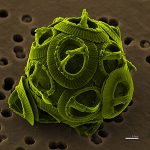
The word “Algae” in the construction industry is used to describe the various organic growths on buildings. Not only can it grow on the render but it can also affect metal, plastic and wood. Algae produces really quickly and only needs sunlight, water and carbon Dioxide to grow.

Property location plays a key factor in avoiding algae growth. For example: if you live in a wooded area, then it cannot be avoided. This is because in wooded areas, are damp and shaded which are both conditions that allow the algae to thrive. Although it cannot be avoided, it can be treated which certain products.

One way that you can avoid algae growth or maintain a property against it, you can use a product that can be used on render to wash any algae off. The product is called Algae Clean. Algae Clean is a multi-surface algae treatment that helps to remove it from a number of different surfaces such as render, pebbledash and brick. It is a product made by K-Rend. Weber render have their own treatment called CL150 which is very similar to Algae Clean. The process takes 2 days but removes all algae that sits on the wall.

Algae cannot be avoided in wooded areas due to the damp and shading, however, products made by rendering companies such as K-Rend and Weber allow you to keep on top the algae. It allows you to remove the algae and ultimately avoid its growth.

The damp conditions in homes and properties encourages the growth of  micro-organisms in particular black mould on the walls

The mould then begin to spread from the source of the dampness to regions where there is less dampness by releasing spores into the atmosphere. These airborne spores are thought to be inhaled by unsuspecting household occupiers. These spores that are thought to be linked and coincide with the increased number of residents suffering from respiratory illnesses and who are living in damp property according to a Finish study endorsed a member of the British Thoracic Society, Dr John Harvey. Examples of respiratory illnesses being asthma,bronchitis and pneumonia.

Fig.1: mould growing on a wall:


In this study, it was found that people who suffered from colds, tonsilitis, bronchitis, pneumonia suffered far more frequently in damp housing conditions than in non-damp housing conditions and people were more at risk of developing asthma,bronchitis and pneumonia in damp housing conditions.

This health issue clearly shows the importance of having a house or property externally rendered as the render prevents moisture from entering the building by being durable enough not to crack as well as preventing water accumulating within the structure.

There are 2 main types of damp problems that occur in buildings which encourage the growth of mould, these two types being penetrating damp and rising damp which can lead to serious problems such as the health problems associated with the mould.

Rising damp is literally damp that rises from ground level of the property to a level of about roughly 120 cm. This distance is determined by factors such as partially to do with gravity, pressure exerted by the weather and also the level of the water table. (The water table is the level of water’s distance halfway between the ground level to the upper level of the wall surface and at which point the ground water pressure is equal to atmospheric pressure, and can vary according to local climatic conditions and also the time of year.)

Rising damp occurs when the DPC (damp proof course) i.e. a horizontal barrier that is designed to prevent the moisture from the ground rising has either failed or doesnt exist at all.

Fig.2: what DPC looks like:

The DPC is a layer composed of a material that resists water to pass through it, this material being either bitumen (a large hydrocarbon molecule obtained from heated crude oil),  polyethylene ( a large self repeating molecule derived from the same basic starting material which is ethene), metal sheets etc. The DPC should be installed rough;y 150mm – 200mm above exterior ground level. If floorboards are to be used, the DPC layer should be placed below this internal floor. If the building’s internal floor is solid, then the DPC should be placed a small distance below this wall.

Penetrating damp is the second type of damp caused by bricks falling off the exterior walls, cracking in the exterior render/ pebbledash or the fragments of bricks being blown off by the force of strong winds which allow water to enter and remain in the brickwork or substrate. This in turn can form small cavities  behind the exterior wall surface which gradually fill up with water. During the winter season, the accumulated water freezes and expands into one of its physical forms which is ice and this increases the size of the cavity and allows for more water to get into the wall. In extreme cases, if the loose or hollow render is not dealt with and repaired quickly, it can fall off.

Penetrating damp can be distinguished from rising damp due to penetrating damp being able to appear anywhere within your house (hence the name penetrating) whereas rising damp typically occurs roughly 4 feet from the ground (hence the name rising damp).

Solution to mould infestation

If black mould is found inside your house or property, the short term solution would be to use an anti fungal treatment or damp wall treatment is required to remove the organism. After this is done, the long term solution would be to locate the source of the dampness and have it repaired to stop mould from growing again. Once the source of the dampness has been located,external rendering materials are to be used such as exterior spray applied wallcoatings and waterproof resin based wall finishes.


Silicone rendering may be a possible solution for:

  • property owners who have to unnecessarily spend large amounts of their income on heating due to dampness being present within the structure of the property If you live in a house where damp is a problem
  • property owners who are unable to insert insulation into the cavity walls.

Note that the effects of adding a silicone render to a property will not be immediately obvious compared to traditional cement or lime render.

The material of the property to be rendered has to be considered carefully when using silicone render, the materials suitable being unpainted brick, natural stone or block exterior walls.

It is known that whereas some renders and waterproof systems will provide protection for your home for up to five years, invisible silicone wall renders are guaranteed to go on protecting your home for many years into the future, up to a maximum of 15 years according to some sources. Because the effects of silicone wall renders are not immediately apparent, the function of using this render is to actually refurbish a building, designed primarily for homes where damp and heat loss are causing serious problems.

While most exterior wall renders will only give some protection from moisture buildup, silicone renders are designed to penetrate deep below the material’s surface of the exterior walls to dry out the substrata, effectively dealing with the source of the dampness. Invisible silicone wall renders seep into the gaps in your building substrata where the moisture enters and prevent damp from entering into the walls. In the long term, silicone wall renders will save large amounts of money on heating bills because drier walls keep the heat in a building far more effectively than walls that are damp. Silicone exterior wall coverings provide insulation to your home and this cuts the cost of your energy bills. In the coastal areas, the coating protects the exterior of your home from erosion. Rendering with silicone in this way also helps to alleviate the frost attacks that can crack render and mortar joints and provides greater protection and added insulation to your home.

All cement renders irrespective of how they are formulated will eventually develop surface cracks due to the nature of cement curing and hardening. Sand and Cement renders are highly alkaline, rigid and brittle surfaces that develop surface cracks through cement shrinkage and thermal expansion & contraction from daily temperature fluctuation.

Sand and Cement Render is conventionally painted for aesthetics. Decorative conventional paints are a low film build meaning that this technology is not formulated to withstand the stresses caused by thermal expansion and contraction of cement based rigid substrates. This in turn forces the paint film to crack due to insufficient film build. Lack of flexibility (elongation) leads to poor crack bridging to withstand the substrate dynamics. These cracks over time will continue to expand & contract and become a gateway to water, corrosive and atmospheric pollutant attack potentially leading to delamination and/or ‘drumminess’.

Traditionally “cement render” means site mixed sand and cement (bulk materials mixed on site) but increasingly these days includes various supplier pre-packed bagged cement renders. Pre-packaged bagged supplied cement renders offer some advantages over conventional site mixed render in terms of ease of handling, projectability via machine and product consistency of mix formula (ie. vs uncontrolled site mixed render), water repellancy, and being ‘breathable’ (ie. through coloured and therefore not painted).

Conventional site mixed render in not waterproof nor is flexible in any shape or form and therefore is prone to cracking over time. All sand cement renders once cured form part of the initial building substrate then a finishing coating system is applied for decorative and protective purposes.

Lime bloom is the most common form of efflorescence ( formation of a salt crystal crust or covering through a chemical change) on cement based renders. It is caused by the migration of lime water molecules (Ca(OH)2) to the surface of the damp external render because of diffusion i.e. the surface of the damp external render contains a high concentration of water molecules than within the render where the lime water molecules are concentrated so this causes a concentration gradient to form resulting in the lime water molecules moving from a region of low water concentration to a region of high water concentration which is the surface of external render. As the moisture evaporates from the surface of the render, this leaves the aqueous lime water molecules on the surface where it reacts with carbon dioxide from the atmosphere to produce a thin surface layer of calcium carbonate (CaCO3) crystals. When this surface coating dries out, the crystals appear white, giving the appearance of colour fading or being washed out.

Lime bloom forms most readily when the render remains damp for several days shortly after application and this is reflected in the fact that it occurs most frequently during the Winter months. In particular, extended periods of rain, retained snow and damp foggy days are conditions most likely to brink on a severe outbreak. Although drying winds are often suggested as a likely cause, they are probably not a major factor. Lime bloom is not visible on damp render and so only becomes apparent with the onset of drying weather. Lime bloom forms most readily when the render becomes wet and damp for several days.

The steps that can be taken to reduce the risk of lime bloom range from including a water-reducing or waterproofing admixture which will reduce the permeability of the mix, to controlling the curing conditions of the render by covering with polythene sheeting, firmly fixed so that it is not in direct contact with the surface of the render, for a few days to enable the mix to develop strength. Also application of K-rend render material prevents the formation of limebloom because the hydrophobic (water hating) silicone compounds inside the render repel the water, preventing excess water building up on the surface of the render.


Textured wall coatings or even smooth painted areas don’t usually become infested with moss but normally either an algae or lichen. The colour and type of growth of the algae or lichen depends upon what area of the country it occurs. However, regardless of what type of micro-organism is infesting the textured wall, the treatment remains almost the same just differing slightly depending upon the surface coating.

If you have a textured coating or Pebble dashed walls then you can undertake exactly the same processes just be careful with the amount of pressure you apply wither during washing, application or rinsing.

1) Preparation of the rendered surface

There are a number of options available in preparing the rendered surface prior to completely removing the micro-organism infestation:

Option 1 – Depending upon the type of growth, you may find that wetting the area and brushing the rendered surface will remove a vast majority of or even all of the growth. I

Option 2 – Brush the area to remove any loose growth and dirt then spray with Concentrated Moss & Algae Killer – Batimoss CR (see further information about this in the text further down).

Option 3 – Wash the area with MHN-F Surface Cleaner. Dilute 1 part of the surface cleaner with 10 parts water, spray or brush onto the surface before working the area with a soft brush. After 10-15 minutes rinse with a hosepipe or small pressure washer.

Option 4 – If the area has hard lichen growth then more forceful measures may be required therefore spray the area with Rapid Moss & Algae Killer – Batiface. This kills the growth on contact and should be left on the surface for between 30-60 minutes. After which the area should be washed with either a hosepipe and brush or ideally a small pressure washer. The pressure washer not only rinses the product but also removes the dead growth from the surface.

2) Treatment

Once the surface has been cleaned and is dry, apply a coat of Concentrated Moss & Algae Killer – Batimoss CR which will kill any remaining growth and the invisible spores but is then designed to be left upon the surface where it can inhibit re-growth.

Note: Batimoss CR should only be sprayed on to a DRY surface. The effective lifespan of Concentrated Moss & Algae Killer – Batimoss CR depends upon the area in which it is being used. If surrounded by trees and / or constantly in shade then you may see fresh growth within 10 – 18 months. However if on an open wall there may be no re-growth for many years. When fresh growth is visible simply brush the area and apply a new coat of Concentrated Moss & Algae Killer – Batimoss CR.

There are organisms i.e. algae that can survive extreme and constantly changing environments such as externally rendered surfaces/ façades. The most important factors that control the growth of such organisms on a façade are the relative humidity and the temperature.
Fig.1: Microscopic view of an algae micro-organism


Every biological organism has different requirements for their own growth, there are some organisms that are entirely dependent on obtaining an organic carbon source from the external render substrate to which they latched on via heterotrophy which is simlar to humans, mammals and insects on a food chain where they consume other organisms as a source of energy. Others organisms are capable of using atmospheric CO2 as a carbon source to generate energy for its own use as well as for consumption of the other organisms via a process known as autotrophy. The autotrophic organisms have a great resemblance to plants in the food chain of a typical ecosystem as plants convert the sunlight energy into chemical energy to be used by it as well as the other organisms that feed/ depend on it for survival.

Specifically, algae and some bacteria convert sun light to chemical energy by photosynthesis (phototrophy).

Organisms like fungi that have features similar to human animal cells use (organic) chemical compounds as energy source just like animals (chemotrophy).

Fig.2: A micro-scopic view of fungi micro-organisms


The most typical characteristic for all microorganisms growing on external render/ façades is their ability to endure repeated cycles of drying and rehydration.

When we find microorganisms growing on a façade, we actually have the presence of a biofilm which contain active and dormant microorganisms and products of their metabolism e.g. acids and polymeric materials often polysaccharides (molecules present in sugar).

The weathering of rendering materials is accelerated by the presence of a biofilm as biofilm acts like trapped water, expanding and gradually undermining the structure of the wall from within. The biofilm is highly diverse in both space and time. The polymeric material (a large, long, self-repeating molecule) acts as a glue due to its chemical components attracting  and trapping dirt from the air which the micro-organisms can use as a source of nutrition. The colonization of the external render begins with autotroph organisms permanently settling on the surface, only requiring inorganic compounds for growth such as atmospheric CO2. These organisms then create primary biofilm providing which provides necessary for heterotroph organisms to grow e.g. algae and lichen might be the primary colonizer on external building renders as they are autotrophic, they require only atmospheric CO2 and can endure long periods without water. They start growing and form the first layer of biofilm which catches dust particles and also provides nutrients for later colonizers such as bacteria and moulds which are not able to synthesise their own food from the atmosphere. Given the time and meeting certain criteria, a complex system of many different organisms in the biofilm can be formed.

Algae are a polyphyletic group (a group developed from more than one ancestral type) of eukaryotic organisms commonly considered as photosynthetic organisms except plants. Different algae have very different appearances, life-styles and tolerance of variations in temperature, moisture etc. They can be:

  • aquatic, well known in freshwater and marine environments where they are completely dependent on liquid water.
  • However, some algae, called terrestrial algae, can live in damp terrestrial environments as, for instance, in soil, on tree trunks or on building façades.

These algae are spread by air, and their tolerance of variation in humidity, light intensity, temperature and in aridity is very high.

The original Mediterranean villas in Europe were externally rendered and painted white to help reflect heat from the Sun during the Summer season, the white pigment of the paint being due to  titanium dioxide

A rendered finish is generally guaranteed to provide protection of the duration 15-20 years if properly applied while the addition of paint further protects the external render from the damage caused by the weather.

However, the application of paint to rendered surfaces is difficult and required practice as it is essential to keep the correct proportion of colour additives when painting on to the rendered surface. If an incorrect proportion of colour additives is applied, the result will be noticeable patches of paint on the external walls. Added to that problem is that even if you manage to accomplish an even finish on the externally rendered surface, the colour oxides can sometimes fade quickly, losing their ability to reflect coloured light a a high frequency because the colour oxide pigment molecules have been spread out too thinly on the paint mixture.  If rising damp or any damp condition is present, the colour oxides can appear in the areas where there is sunlight and hence less evaporation occurring.

Note: a colour pigment is

  • a fine particle which is remains mostly undissolved in the paint medium and its purpose is to provide colour to lime based building materials.
  • does not react with the other constituents in a rendered mix
  • alkali resistant ( i.e. resistant to environments which have a low Hydrogen proton concentration)
  • able to retain their colour in an alkaline environment such as the Ca(OH)2 environment in mature lime putty
  • highly resistant to decomposition from the action of high energy ultra violet radiation
  • usually derived from inorganic materials
  • able to coat the cement and sand particles of a render mix.
  • uniformly distributed throughout the mix
  • based on oxides and hydroxides of iron and these are used to
    produce various shades of red, yellow, brown and black. Oxides of chromium ( Cr(III) ions) are used to produce green colours, compounds of cobalt are used to produce blue colours. Also, oxides of aluminium, nickel and antimony are also used often in combination with other metallic oxides.


A house that has been rendered and painted will have clean, smooth lines and precise corners. It is recommended that prior to applying the paint on the external render or preferably when consulting an architect on the design of the property that a smooth external render should be applied followed by the painted finish to achieve a nice, smooth finish.

Another use for painting rendered surfaces is in situations where the brick walls have been severely damaged or repairing the brick walls will not fully restore them.


Lime is known as a traditional material that has been used for many years. It is also a material that is being increasingly recommended by conservationists and architects because it does not have the potential to damage traditionally constructed buildings greatly in comparison to hard cement mortars and gypsum plasters which are well known to be  inappropriate for a traditionally constructed building.

The reason why traditional lime plasters are more suitable for protecting traditional buildings than modern rendering materials lies in it being more porous and having the ability to absorb moisture from the air. When traditional lime render is used with a breathable paint, this can help reduce the possibility of condensation building up within the structure of the property, this condensation being the cause of damage to properties and traditional buildings.

To apply traditional lime render to a property, first its base component lime putty is to be made. Limestone (calcium carbonate, CaCO3) is burnt in a kiln to produce quicklime (calcium oxide, CaO). The quicklime (calcium oxide, CaO) is then mixed with water to produce a boiling liquid (calcium hydroxide, Ca(OH)2) which is passed through a sieve and then left to mature in a pit or tanks for a number of months. This process is called slaking and the resultant lime putty (calcium hydroxide, Ca(OH)2) ends up the consistency of cream cheese.

The mature lime putty  (calcium hydroxide, Ca(OH)2) is then mixed with a sand to make a lime mortar. The type of sand used depends on the use of the lime putty i.e. coarse sands are typically used for buildings and fine sands are used for plastering. Animal hair is added into the mix to increase the strength of the lime putty. The mixed lime mortar is then left to mature for a period of one to two weeks before it is used to prevent it from cracking or shrinking.

Another use of lime was as a decorative finish to buildings through the application of limewash. Limewash is made by mixing slaked lime in water (calcium hydroxide, Ca(OH)2) which sets slowly by absorbing carbon dioxide from the air to produce crystals of calcite (calcium carbonate, CaCO3).

Limewash maintains the building allowing vapour to pass through/ permeate through the decorative coatings. If a building is unable to release water molecules, water becomes trapped in the external walls, encourages mould to grow and this results in the underlying material such as wood to rot. The trapped water vapour condenses and this can raise heating bills because damp walls absorb a lot of heat and prevent the warm air from circulating evenly around the property.


On the other hand, hard cement renders and many modern masonry paints prevent moisture from passing through the property to be evaporated. This may result in dampness, cold walls, condensation, flaking paint, rotten skirting boards, joists and other timber fittings, increased heating bills etc.

Lets discuss
do you have any questions? contact us via email or complete the ENQUIRY form.
EMAIL ADDRESS
info@externalrendering.net
ADDRESS
Unit 114, 313 Billet Road, UK E17 5PX
CALL US
020 8531 6361

    [spam_fix]