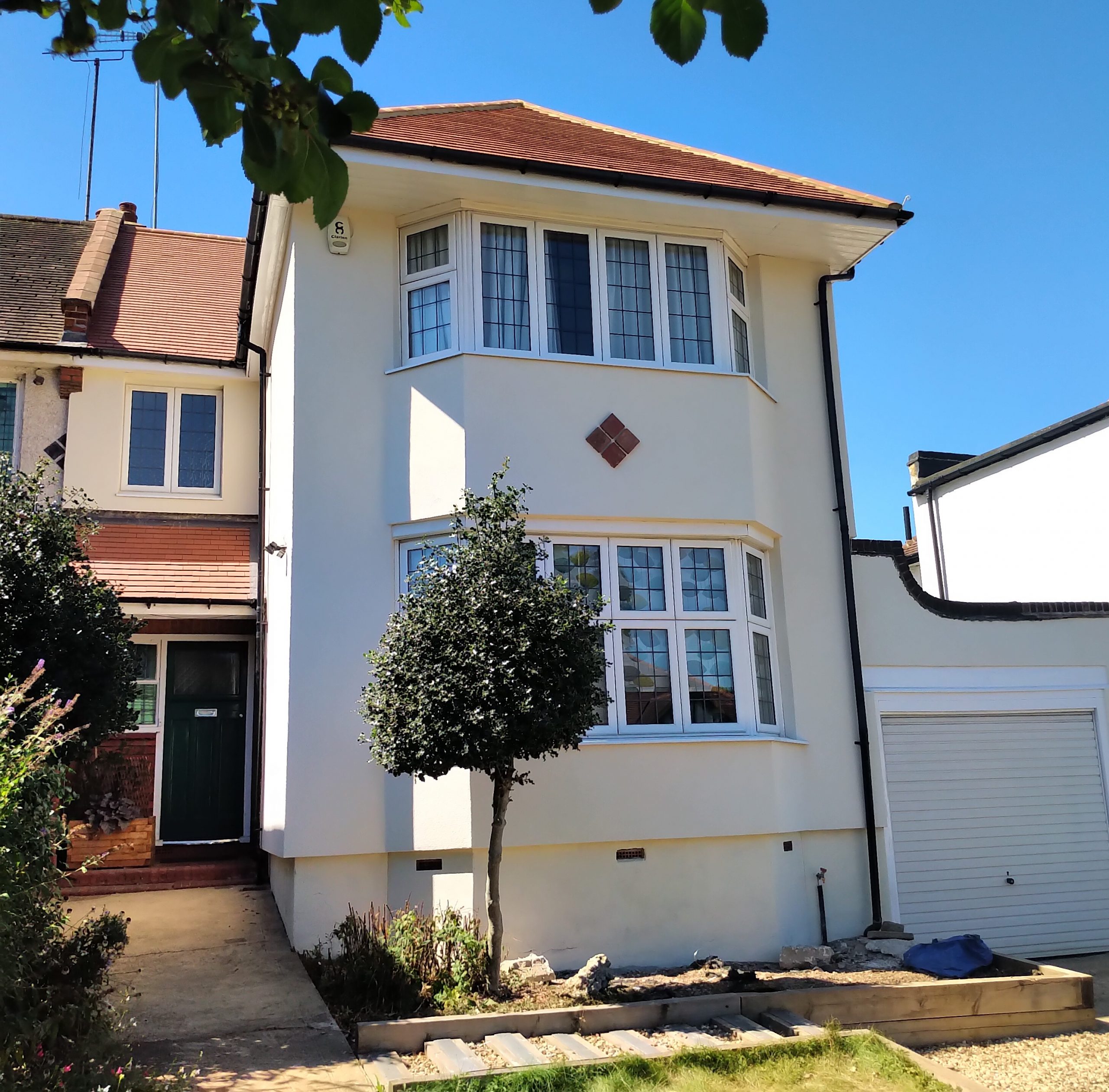


We offer the rendering service that involves the use of External Wall Insulation (EWI). EWI is used to insulate the exterior walls of a building to improve energy efficiency and thermal comfort.
PROS:
- Reduces heat loss through the walls, leading to lower energy consumption for heating and cooling and reduced energy bills
- Can also provide some degree of sound insulation, reducing external noise penetration
- By improving the energy efficiency and appearance of a building, EWI can increase a properties value
CONS:
- The initial installation cost of EWI can be high, however, the long-term energy savings can offset this initial investment
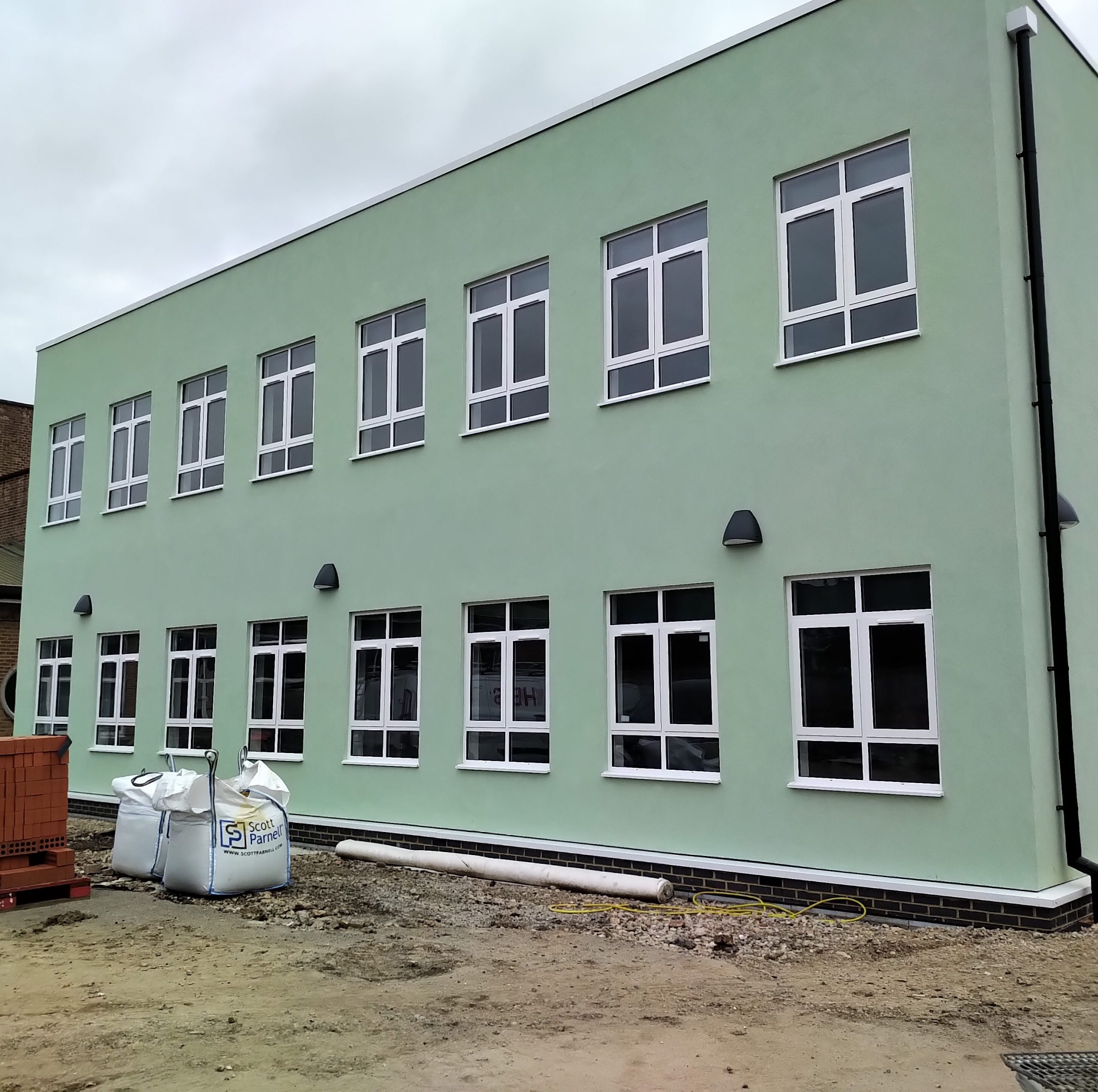
Practical aspects of EWI:
Prior to the EWI process begins to the chosen surface (this surface being either insulation, render board, concrete blocks, smaller blocks, bricks or stone surfaces, this chosen surface being called from now on the substrate), the surface is cleaned and dried to ensure there is no contaminant or undesirable object that may oppose the joining of the base coat render to the surface. The insulation is firstly installed, this is usually done with adhesive and mechanical fixings. The insulation size starts at 20mm and goes up to sizes such as 150mm.
The first coat is the base coat with full fibreglass reinforcement mesh which is applied to the substrate as well as the beading. The first coat is left to dry for a number of days before any other coatings can be applied.
Once the first coat of the base coat has been applied to the substrate then this is left to cure for a number a days. Depending on the rendering manufacture system that is used then a primer is applied to the base coat. To finish the job off the final coat is applied in the colour of your choice.
Usually the minimum thickness of the render applied to the substrate is 8mm-10mm
In a sunny and dry day the render hardens within 2-6 hours however in moist and cold conditions it can take up to 48 hours for this to happen. Once this is all complete we clean up the site and the job is completed.