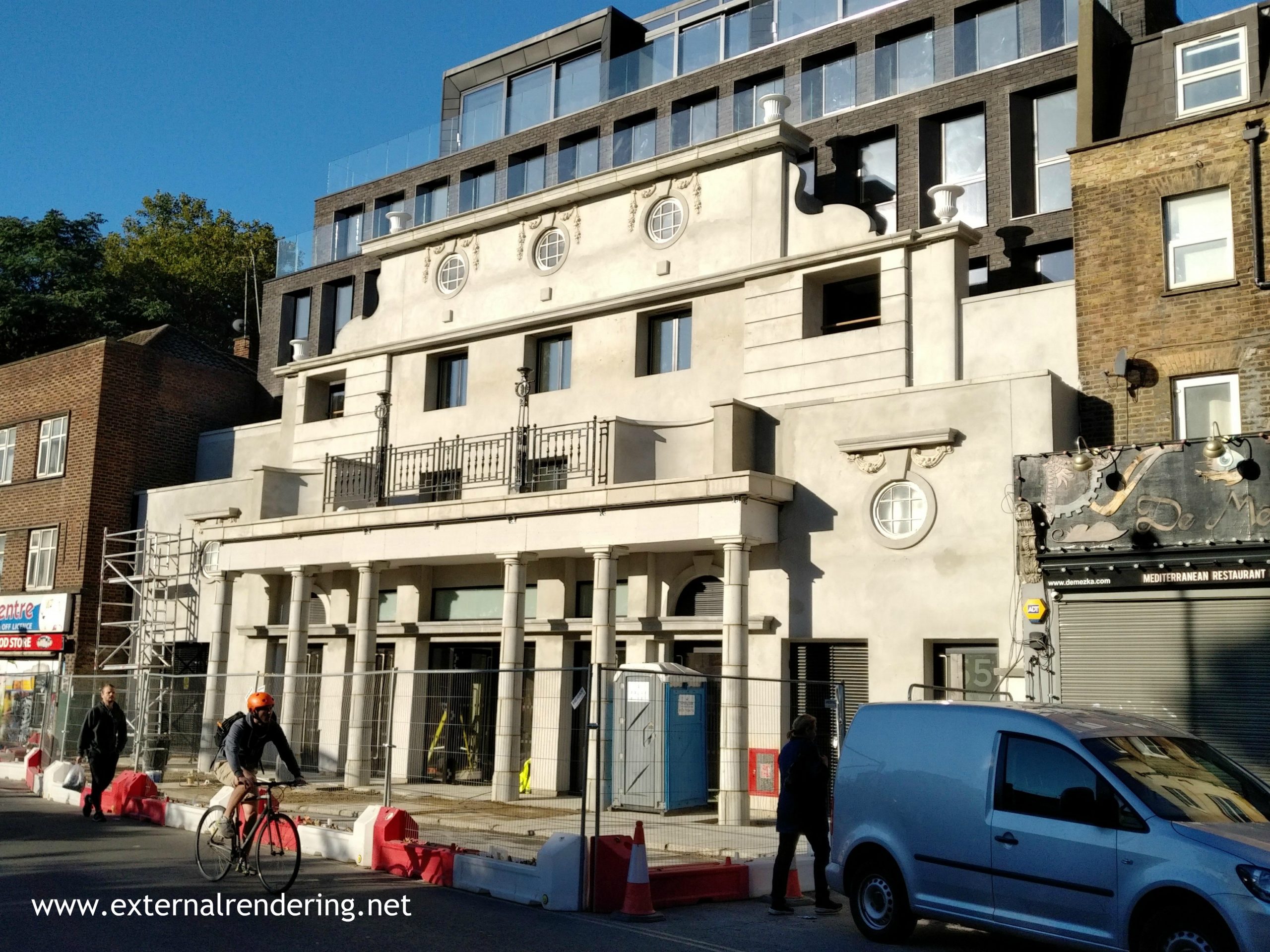


We offer a rendering service that involves the use of traditional rendering materials. Nowadays, sand and cement is a less common choice for rendering a property.rnrnBelow we have listed some advantages and u003ca href=u0022https://www.externalrendering.net/problems-of-sand-and-cement-renders/u0022u003edisadvantagesu003c/au003e for this render system.rnrnu003cstrongu003ePROS:u003c/strongu003ernu003culu003ern tu003cliu003eIt is cost effectiveu003c/liu003ern tu003cliu003eIt is a durable render systemu003c/liu003ern tu003cliu003eThe manufacturing process is environmentally friendlyu003c/liu003ernu003c/ulu003ernu003cstrongu003eCONS:u003c/strongu003ernu003culu003ern tu003cliu003eStructurally, sand and cement is inflexible so it is prone to crackingu003c/liu003ern tu003cliu003eIt reduces the ability of a building to evaporate and circulate the moisture that’s produced inside the house itselfu003c/liu003ern tu003cliu003eIt requires it to be repainted as a result of cracking occurring so this type of render has a fairly high upkeepu003c/liu003ernu003c/ulu003e
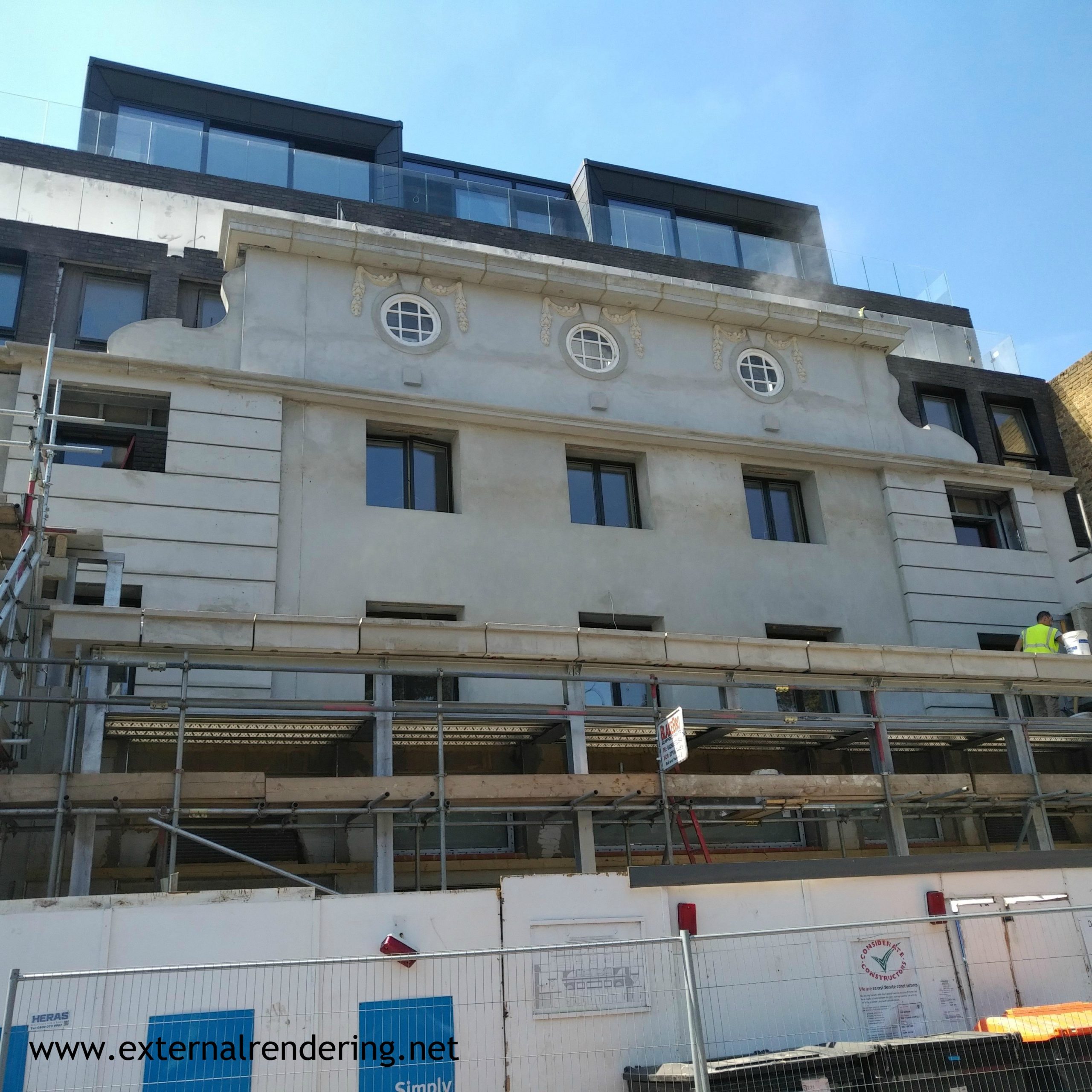
u003cstrongu003ePractical aspects of traditional renderingu003c/strongu003ernrnTraditional renders consist of a number of layers:rnu003culu003ern tu003cliu003eThe first coat or the “laying-on coat” is applied two or more times, consisting of a mixture of 2 parts lime to 5 parts sand. It is applied to the substrate until a depth of about 9-16mm is achieved.u003c/liu003ern tu003cliu003eThe first coat is allowed to set between 2 to 7 days before the next step can proceed ( the duration of 2 days applies to weather in the Summer and the 7 days duration applies to weather in the Winter).u003c/liu003ern tu003cliu003eThe middle layer or the “butter coat” is applied once. Note that butter coat is not common in practice.u003c/liu003ern tu003cliu003eThe last or finishing coat is applied once and consists of a mixture of 1 part lime to 3 parts sand. This coat is normally only be a few millimetres thick (3-9mm).u003c/liu003ernu003c/ulu003e